 Memento
Capturing
Capture is deliberately dumb: one box, no filing decisions, no friction. Everything smart happens afterwards, in the background.
What you can capture
- Notes and thoughts — type or dictate; ⌘+Enter sends it.
- Links — paste a URL; Memento fetches and reads the page for you.
- Files — PDF, DOCX, PPTX, XLSX, Markdown, TXT, HTML, CSV. Drop them on the capture page.
Duplicates are detected server-side — capturing the same document twice just tells you it's already in your library.
Sequential vs. bulk
Normal capture is sequential: one item at a time, and the agent may ask a clarifying question before filing. When you're importing a backlog — an old notes folder, an export from another tool — use Bulk import: everything is filed in one pass with no questions asked. You can always refine pages later.
Notes you write in place
New note opens a draft right in the editor — good for meeting notes you're typing as they happen. A draft sits in your inbox untouched until you hit Analyse & file; then it goes through the same pipeline as any capture, and your original note is preserved as the source.
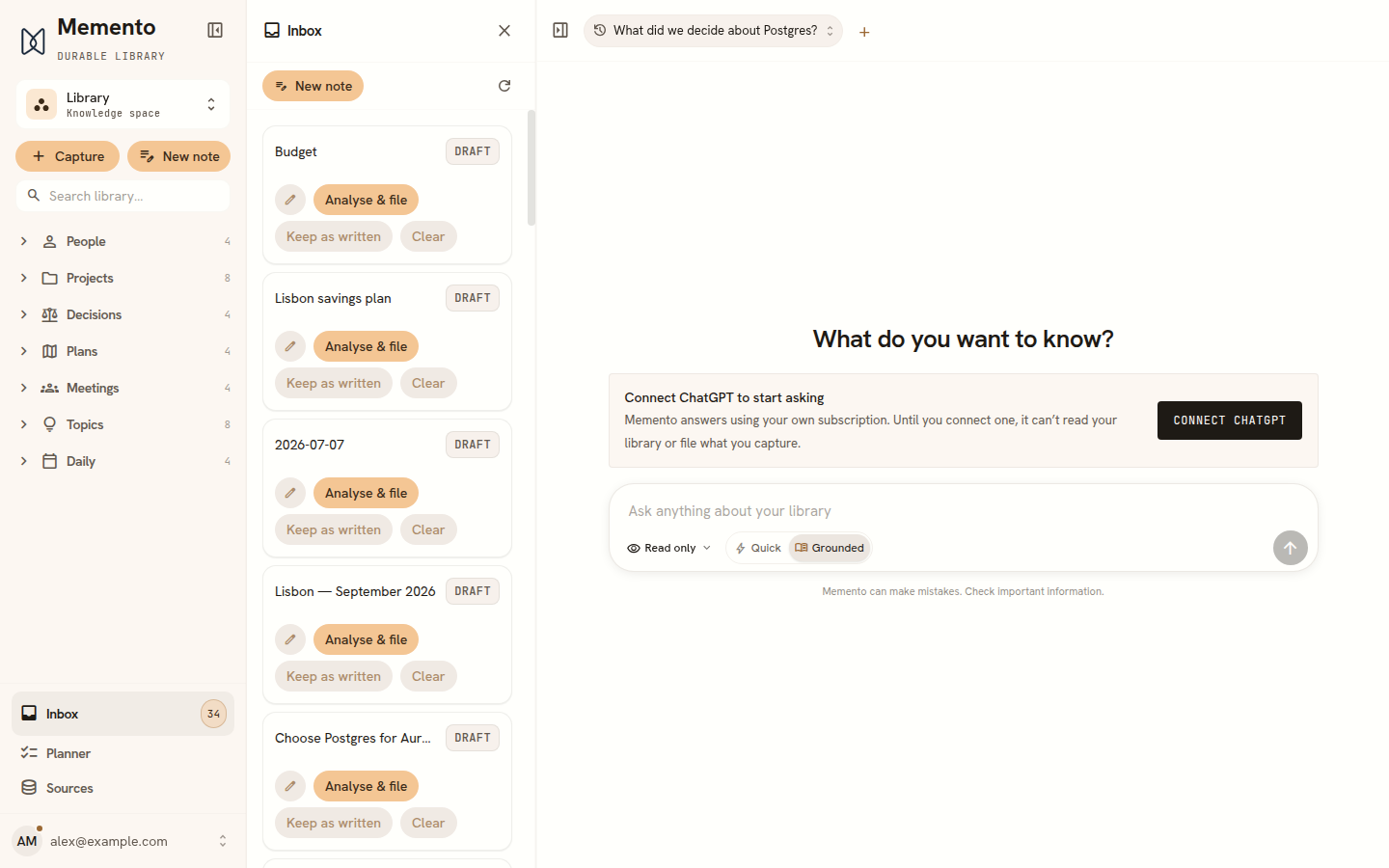
The inbox
The inbox is everything still in play: items waiting to be analysed, items the agent has a question about, and drafts. A filed capture stays visible (marked with where it went) until you clear it, so nothing ever silently disappears.
Click anywhere on an item to open it and read it in the middle of the screen; the buttons on the card (Analyse & file, Clear, and the rest) still do their own thing. The inbox stays open while you read, so working through a pile is one pass rather than reopening the panel for every item.
From your phone
The fastest capture is the one you never open the app for: share any page or selection from another app straight into Memento. See On your phone for one-time setup on iOS and Android.