 Memento
Library & editor
The library is a wiki the agent keeps tidy for you: typed pages, linked together, grouped into categories you control.
Finding things
- Categories — People, Projects, Decisions, Plans, Meetings, Topics, Daily by default. Add or rename them under Settings → Categories; the agent files into whatever taxonomy you define and can propose new categories when yours don't fit.
- Search — the box above the tree filters your whole library.
- Favorites — star a page to pin it; recency stamps show what moved lately.
Editing
Every page is a document, not a database record. Click Edit and type — changes autosave as you go. Headings, lists, tables, and links all work the way you'd expect. To link one of your own pages, type [[ and pick it from the list that appears (or choose Link to page from the / menu) — the same connections the agent makes, now at your fingertips.
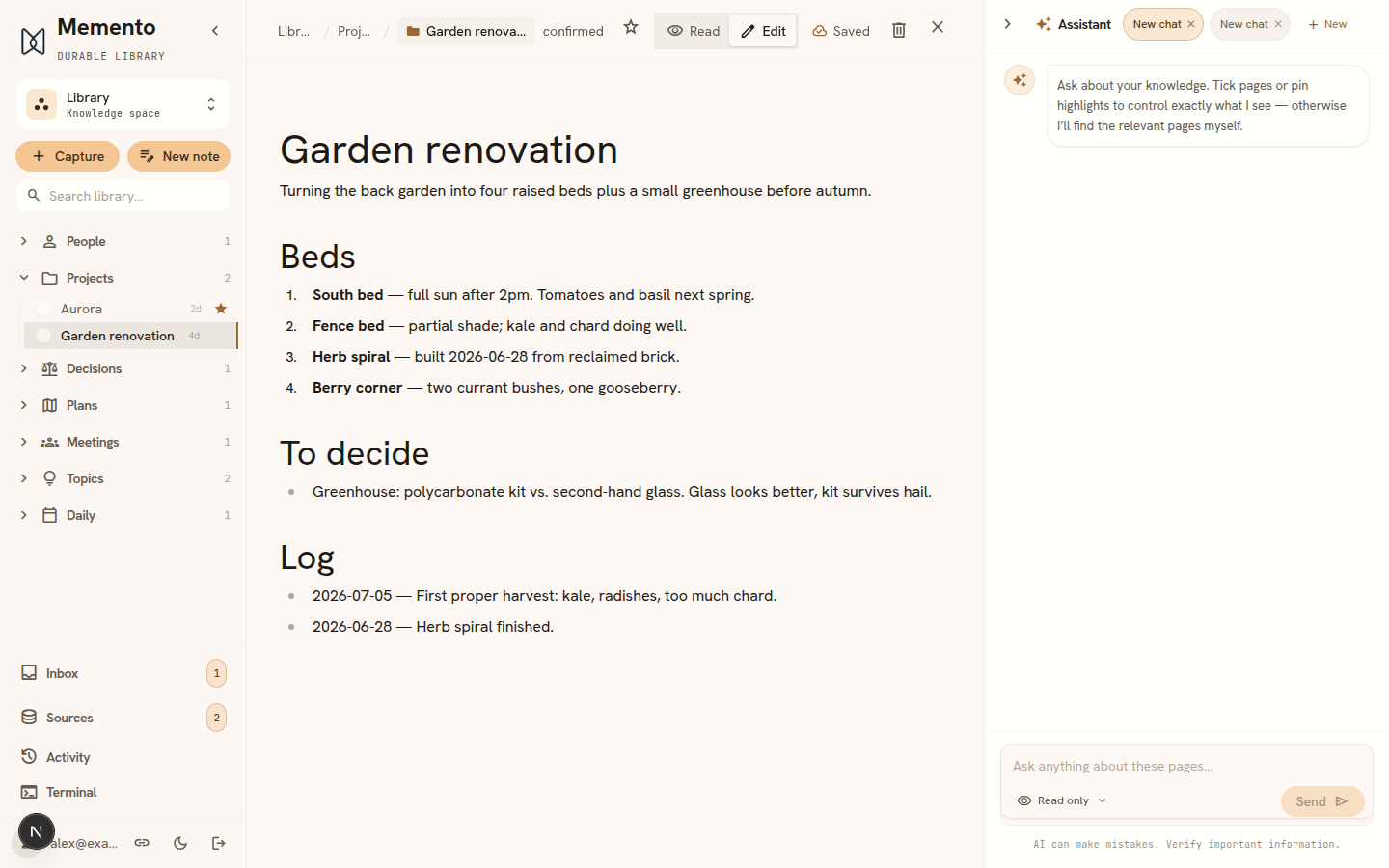
The same / menu has Calculation under Advanced, for pages where the numbers should work themselves out rather than be typed in — see Numbers & calculations.
You and the agent share the same pages, live. If it's working on a page you have open, your library marks the page as held; if you both edited, non-overlapping changes merge silently and true conflicts are surfaced for you to resolve — your edit always wins by default.
Page properties
Every page carries a few properties — its type, title, status, and some bookkeeping dates. Expand Properties at the top of any open page to see them. Fields with a fixed set of values are dropdowns: type offers your own categories (the same ones you manage under Settings → Categories), and fields like status pick from the wiki schema. Free-text values save when you leave the field; add your own properties with the row at the bottom. Only the id is fixed — links and filing depend on it.
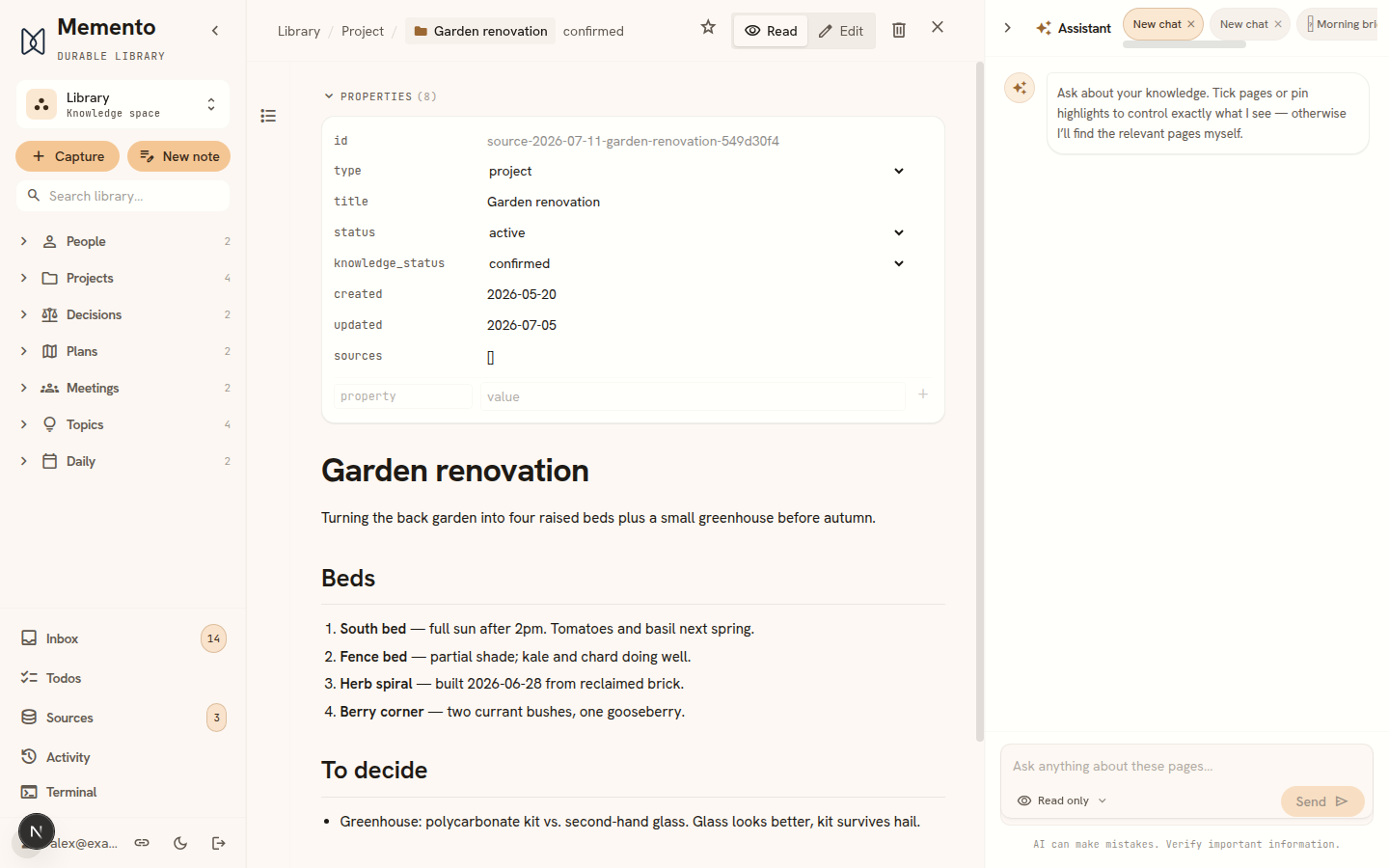
These aren’t cosmetic: type decides which category the page lives under, status is where the page is in its life (active, archived, superseded), and the separate knowledge_status is the trust label shown next to the title — see Sources & trust. Underneath they’re the document’s front matter, plain text like everything else, so whatever you set here travels with the page.
Inline AI editing
Select any text and give an instruction — “make this concise”, “fix the grammar”, “translate to Danish”. The rewrite streams in as a diff you accept or reject. It runs on your own agent, like everything else.
Deleting is reversible
Deleting a page archives it; restore it any time from Settings → Archive. Permanent deletion is a separate, explicit step on archived pages. Underneath, your library is version-controlled, so history survives even permanent deletes — see Sources & trust.